_edited_edi.png)


Holding Space for Healing – For Others, and For Yourself
Updated: May 24
In the world of massage therapy and bodywork, we often speak of “holding space”—a phrase that may sound abstract at first, but its meaning is both profound and essential to true healing. As a practitioner, I’ve come to understand that my work is not just about releasing muscles or improving circulation. It’s about presence, safety, trust, and compassion. It’s about creating an environment, both physically and energetically, where healing becomes possible.
What Does It Mean to Hold Space?
To hold space for someone is to be fully present with them, without judgment, without trying to fix them, and without making it about you. It means allowing someone to experience whatever they are feeling: pain, grief, joy, release, resistance, and to simply be there with them through it. In the massage therapy room, this might mean allowing a client to cry during a session, to remain quiet, or to talk freely, knowing they are seen, heard, and respected.
But holding space is more than emotional support. It’s also about creating physical safety. Providing a clean, calm environment where a person’s nervous system can downshift, and their body can begin to trust again. Trauma, stress, and chronic tension live in the body, not just the mind. When we hold space well, we invite the body to soften and to open.
Holding Space for Clients
Every person who walks into my practice brings more than their physical body. They bring stories, stress, grief, trauma, exhaustion; and sometimes, hope. As a massage therapist, my job is not to diagnose or counsel, but to witness, to support, and to facilitate healing through touch and presence.
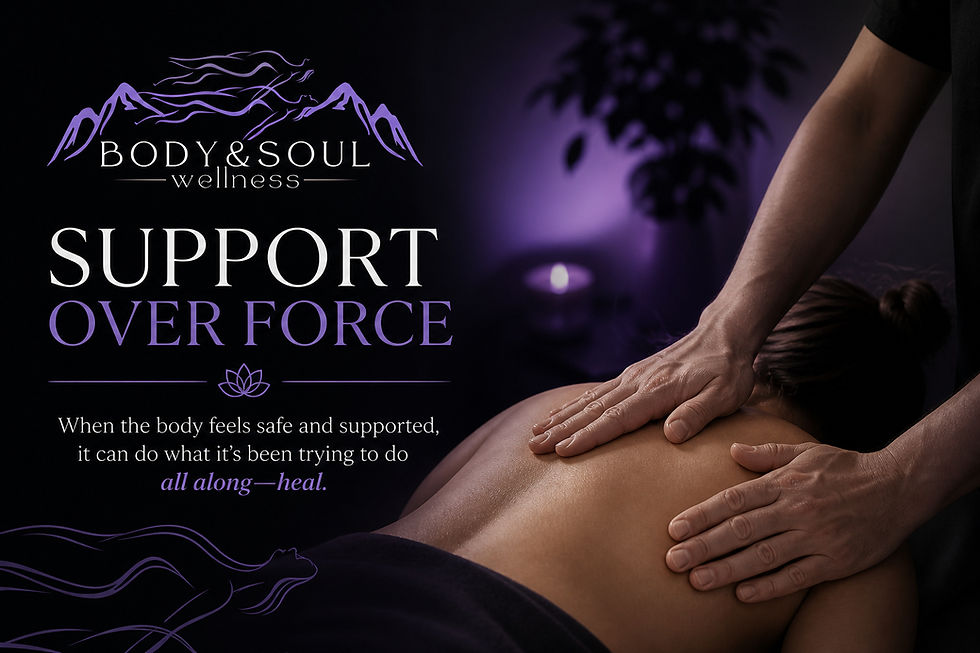
When I place my hands on someone’s back or feet or shoulders, I am not just thinking about anatomy. I am listening. Noticing where the breath gets stuck, where the tissue is guarded, where energy isn’t flowing freely. I slow down. I pay attention. I let go of the need to fix; and instead, I offer curiosity, patience, and a grounded presence.
Sometimes, the most powerful thing I can offer isn’t a specific technique. It’s simply this: I’m here. You’re safe. You don’t have to carry it all by yourself.
Holding Space for Yourself
One of the hardest lessons for any healer is learning to hold space for yourself. Whether you are in the healing field or not, it’s important that we hold space for ourselves.
We give so much, to clients, to family, to our community, that we often forget our own needs. But just as our clients deserve to feel safe, seen, and supported, so do we. And we cannot sustainably hold space for others unless we are also holding it for ourselves.
This might look like:
• Taking time to rest after a long day of sessions, without guilt.
• Letting yourself feel your own emotions, instead of pushing them aside.
• Setting boundaries around your time, energy, and emotional labor.
• Seeking your own healing through bodywork, therapy, or quiet solitude.
• Saying no when your plate is full.
Self-care is not indulgence. It’s a sacred responsibility. When I nourish myself, I return to the massage table with more clarity, more empathy, and more capacity to be present for others.
The Shared Space of Healing
Healing is not something we do to someone. It’s something we co-create, moment by moment. My hands may guide, but it’s the client’s nervous system, breath, and spirit that do the deep inner work. When we both enter the session with intention and respect, we create something powerful: a shared space where transformation is possible.
And whether I’m holding space for someone else or for myself, the foundation remains the same. Presence, non-judgment, and love.
So the next time you step onto a massage table, or into any space meant for healing, take a breath. Feel your body. Let go. Trust the process.
And remember: you don’t have to do it all alone.

Comments